
How Do I Choose a Modern Wedding Dress That Will Not Date Quickly?
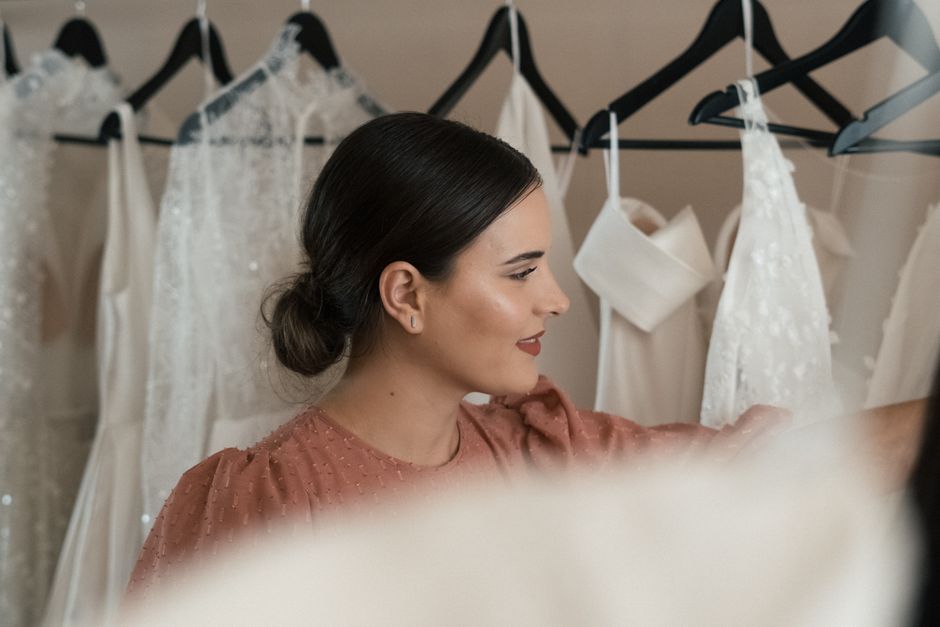
Choose a dress with a stable base silhouette, fabric that moves well on camera, and one contemporary detail you can remove or soften. Keep the boldest idea in a bow, veil, jewelry, overskirt, or styling choice rather than building it into the gown. A dress lasts in photographs when the shape feels like you and the statement detail remains optional.
How do I know whether a trendy wedding dress will date quickly?
A trendy dress dates quickly when its most visible feature belongs to one narrow fashion moment and cannot be separated from the gown.
Fashion moves in layers. The silhouette is one layer. Fabric is another. Neckline, sleeves, trim, veil, hair, makeup, and jewelry sit on top. The closer a detail is to the dress's structure, the harder it is to revise when the look no longer feels right.
The historical record makes this plain. The Journal of Digital Convergence tracks wedding styling from the 1960s through 2014 and found distinct changes by decade in silhouette, color, details, makeup, hair, and accessories. Its account of 1980s styling includes flared forms, puffed shoulders and sleeves, strong eye makeup, elevated fringe, and long veils. Specific combinations become time stamps.
That does not make a current detail wrong. It gives you a test. Remove the statement feature in your mind. If the dress still looks like your dress, the feature is an accent. If the dress loses its whole identity, the trend is carrying too much weight.
The Knot suggests judging a gown from a ten-, 20-, or 50-year view. Use that question at a fitting: would you still want the underlying shape if the dramatic bow, sculptural sleeve, or unusual neckline disappeared? A clear yes is useful evidence.
| Dress decision | What stays in photographs | What can change |
|---|---|---|
| Base silhouette | A-line, mermaid, column, or another shape that suits your taste | Neckline or skirt styling |
| Fabric | Its drape, structure, sheen, and movement | Veil, jewelry, or shoe detail |
| Statement detail | The dress remains complete without it | Bow, overskirt, gloves, cape, or other detachable piece |
Trend is not the enemy. Permanence is the risk. A detail that comes off gives the ceremony and reception different notes without asking the gown to carry both.
Can a minimalist wedding dress still look modern?
Yes. A minimalist wedding dress looks modern when its line, fabric, and fit are deliberate rather than bare by default.
Minimalism is not absence. It is editing. The contemporary effect comes from proportion: a clean column, a bias cut, a structured A-line, or a slip shape; a neckline with purpose; a fabric chosen for how it falls and catches light.
Brides describes structured A-line, bias-cut, column, and slip gowns as current options, and its experts frame modern bridal style around refined simplicity and quality over quantity. The same article recommends clean minimalist elements paired with one bold detail. That is the useful formula: restraint in the structure, expression at the edge.
Fabric makes the line visible. According to The Knot, fabric affects a gown's aesthetic, fit, movement, and photographs. Silk satin suits sleek minimalist designs. Tulle creates volume. Mikado and Duchesse satin support structured silhouettes. These are not interchangeable choices. A minimal gown in a soft fabric tells a different story from the same shape in a firm one.
Ask to see the dress in motion. Walk. Sit. Turn. Look at the skirt after it has moved. Bridal stylists interviewed by Brides advise testing movement and maintenance before committing, and warn that overly tight alterations can pull or rip in ways that show in photos.
Fit is not a finishing touch. Fit is part of the design.
A 2013 Fashion & Textile Research Journal study surveyed 348 brides-to-be and reviewed 217 wedding-dress images from 30 brands. Respondents preferred mermaid and A-line silhouettes, silk, white-ivory color, and tube-top necklines. The study also developed seven looks from one basic mermaid dress with detachable components. One firm base can hold many moods.
Which wedding dress details are most likely to look dated?
The details most likely to look dated are highly specific features repeated across the dress, hair, makeup, and accessories at the same time.
A strong sleeve can work. A large bow can work. A dramatic veil can work. The problem begins when every choice repeats the same trend signal. Then the image has no quiet space.
The Met's account of designer Ann Lowe shows how clearly bridal design can reflect its wider moment. Her early-1940s work used structured shoulders and gentle A-line skirts; her 1947 designs reflected the New Look through ruffled strapless necklines, accentuated waists, full skirts, and hand-painted flowers. Fashion history is rich because details belong to their periods. Wedding photographs preserve that bond.
Use the fitting room as a place to separate taste from noise. Ask four questions before approving a statement feature:
- Would the gown still feel complete if this came off?
- Does this detail suit the way you dress outside the wedding?
- Does it work when you sit, walk, and turn?
- Is the same idea appearing again in the veil, hair, makeup, and jewelry?
The last question matters. One bold feature reads as a choice. Four matching bold features read as a costume.
Keep permanent choices calm when you want room for change. Put the risk in detachable pieces. The Knot specifically recommends an oversized detachable back bow for a trend-forward shift from ceremony to reception. The 2013 research on variable design supports the same principle: a stable dress can produce distinct looks through components rather than through multiple gowns or permanent construction.
Photographs do not demand neutrality. They reward coherence. Choose the detail you would miss if it were gone. Let the rest of the look give it room.
Frequently Asked Questions
How can I personalize a classic wedding dress without following a trend?
Use personal accessories rather than adding permanent gown-level features. Brides stylists cited by Brides recommend heirloom jewelry and engraved pieces, while Brides also points to meaningful shoes and family jewelry as restrained ways to make the look your own. The dress stays simple; the meaning stays close.
Should I choose a trendy wedding veil or keep accessories simple?
Choose a trend-led veil when it is a separate piece and the dress still feels complete without it. The Knot recommends detachable elements for a statement that can change from ceremony to reception, and a veil follows the same logic. Keep the rest of the accessories quiet so one detail has room to speak.