
Which Foods Contain Microplastics, and Are They Dangerous?
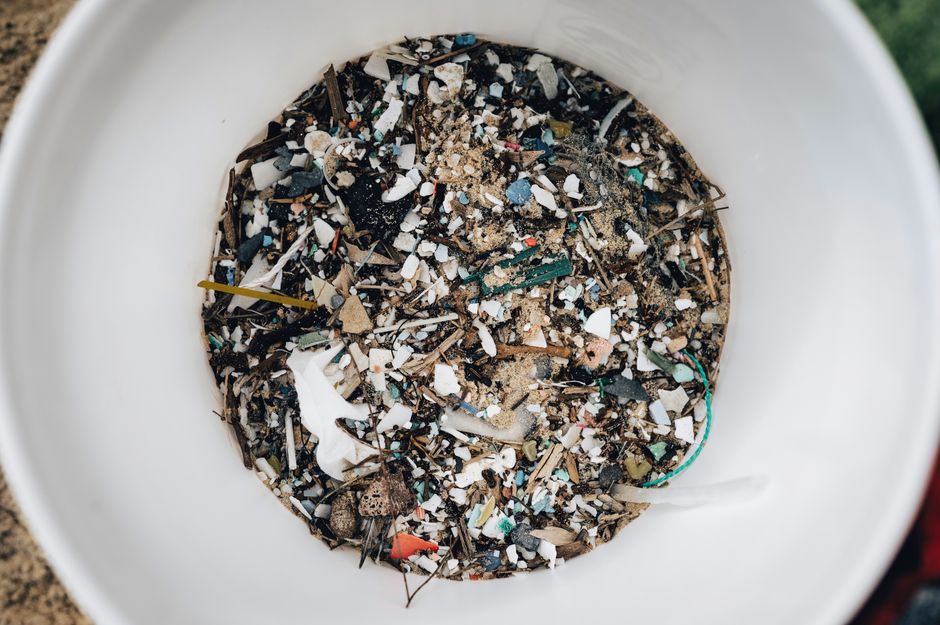
Microplastics have been reported in foods and drinks including salt, seafood, sugar, beer, bottled water, honey, milk, and tea. Those findings show exposure, but they do not establish that the detected levels harm people. Results vary widely because laboratories use different methods, and current evidence does not demonstrate a health risk from levels found in food or show that packaging is a significant source.
Which foods have been found to contain microplastics?
Researchers have reported microplastics in several everyday foods, although the amount of research differs sharply by category. The U.S. Food and Drug Administration lists findings in salt, seafood, sugar, beer, bottled water, honey, milk, and tea, and says evidence suggests contamination enters food primarily from the environment.
That list is not a ranking of which foods contain the most particles. A systematic review by Di Fiore and colleagues found that drinking water, seafood, honey, sea salt, beer, and sugar were among the most investigated categories. Tea, packaged chicken meat, and milk products had comparatively few studies. More studies can mean more opportunities to detect particles; it does not automatically mean a food is more contaminated.
Plants raise a related question. In controlled experiments, Li and colleagues observed plastic beads moving from roots toward shoots in wheat and lettuce. The tested beads were detected in the plants’ xylem sap after exposure to a suspension. This shows a possible uptake pathway, not a measurement of typical plastic levels in bread, vegetables, or other foods. The authors also cautioned that manufactured beads may behave differently from the varied particles in real environments.
A review by Lazăr and colleagues considered 23 research articles on plastics in fruits, vegetables, and seedlings. It describes root uptake and surface deposition as possible routes, while stressing that many studies used controlled conditions and standard plastic particles. The practical distinction is simple: a pathway is plausible, but the quantities in ordinary foods remain unsettled.
Are microplastics in food dangerous to people?
Current evidence does not establish that the levels of microplastics detected in food harm people. The FDA says scientific evidence does not demonstrate a human health risk from those levels. A systematic review likewise concluded that available evidence is insufficient to establish a concrete adverse health effect.
Keep exposure and harm separate. Finding a particle in a sample answers whether the test detected it; it does not show what happens after people consume it, or whether the amount has a health effect. The NIH makes this distinction in its coverage of a 2024 bottled-water study: the potential health effects of the tiny particles it found remain unproven and unknown.
That study illustrates why particle counts can attract attention without resolving the health question. Using stimulated Raman scattering microscopy, researchers examined three popular bottled-water brands and reported an average of about 240,000 plastic particles per liter. About 90% were nanoplastics. The total was 10 to 100 times higher than earlier estimates that mostly focused on larger microplastics. The method identified seven common plastic types, including PET and polyamide, while millions of additional detected particles could not be classified as one of those types.
The larger count is not, by itself, evidence of greater harm. It reflects a method able to detect many smaller particles that earlier approaches might not have counted. Until studies can consistently identify and quantify particles—and connect measured exposure to health outcomes—the number is a finding about detection, not a risk threshold.
Does plastic food packaging increase microplastic exposure?
There is insufficient evidence to say that microplastics migrate from plastic food packaging into foods and beverages, according to the FDA. That leaves an important evidence gap: reports of particles in food do not automatically identify the route by which they arrived.
For now, the FDA says available evidence points primarily to environmental contamination. It would overstate the research to treat plastic packaging as a proven explanation for particles found across food categories. The bottled-water study also should not be read as proof that the bottle itself caused every particle detected; the reported findings alone do not establish the source of each particle.
Measurement is the other constraint. The FDA says there are no standardized methods to detect, quantify, or characterize microplastics and nanoplastics in food. It notes that some study methods have variable, questionable, or limited accuracy and specificity. The Di Fiore review describes differences in sample preparation, digestion procedures, concentration units, and analytical methods. Reported digestion protocols ranged from 12 to 72 hours, and only two papers reported digestion efficiency.
Those differences make direct comparisons risky. One result may count a different size range, use a different preparation process, or report particles in different units than another. The review’s call for standardized laboratory approaches is not a technical footnote; it is a prerequisite for deciding whether apparent differences among foods are real.
For a practical response, keep the conclusion proportional to the evidence: the research documents particles in some foods, but it does not currently establish that detected food levels pose a health risk or that packaging is a major source. If you are reading a new headline, check what food was tested, which particles the method could detect, and whether the study measured health effects or only particle presence. That three-question check helps separate a new exposure finding from a claim about danger.
Frequently Asked Questions
Are vegetables and grains a source of microplastics?
Plant uptake is a possible route: controlled experiments detected plastic beads moving from roots toward shoots in wheat and lettuce. That does not establish how much plastic is present in everyday produce or grains. Reviews call for more testing under realistic conditions and across more crops.
Can scientists reliably measure microplastics in food?
Researchers can detect particles, but results are hard to compare because there are no standardized methods and studies differ in sample preparation, digestion, units, and analytical techniques. Some methods have variable or limited accuracy and specificity. Better standardization is needed to establish reliable, comparable estimates.
Sources
Related guides
What Is the Best Alternative to Plastic Food Packaging?
Compare paper, molded fiber, compostables, and reusable food packaging by performance, disposal access, and practical trade-offs.