
Can You Make Pasta Salad the Night Before?
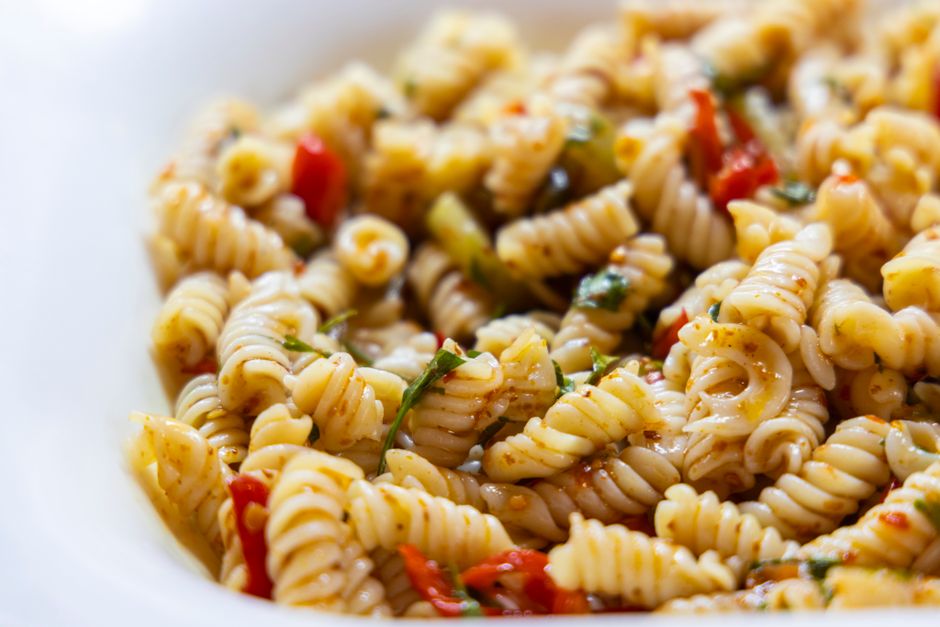
Yes. Make the pasta salad ahead, refrigerate it promptly at 40°F (4°C) or below, and hold back delicate ingredients such as arugula, basil, tomatoes, and fresh herbs until close to serving. Pasta absorbs dressing as it rests, so taste the salad and add a little more dressing before serving if it seems dry.
Can you make pasta salad the night before?
Yes. A night in the refrigerator gives the flavors time to mingle, and the salad can be ready before the busy part of a meal. Taste of Home Test Kitchen says its Italian pasta salad can be made a day ahead and chilled overnight. The key is to treat advance preparation and final assembly as separate steps.
Cook and dress the pasta, then refrigerate it in a covered container. Leave tender greens and herbs out for now. America's Test Kitchen specifically recommends waiting to add arugula and basil until just before serving when making its Italian pasta salad ahead. Those ingredients bring freshness at the end; they do not need to sit through the whole rest.
Pasta firms as it cools. America's Test Kitchen accounts for that change by cooking pasta two to three minutes past al dente for its salad. Follow the recipe you are using rather than assuming every pasta shape needs the same timing. The useful principle is to plan for the firmer texture that comes with chilling.
Before serving, stir the salad, taste a piece of pasta, and check whether the dressing still coats it. Add dressing a little at a time if the salad seems dry, then fold in the delicate ingredients. This sequence preserves the convenience of making the base ahead without asking tender greens to endure overnight storage.
Why does pasta salad get dry in the fridge?
Pasta salad gets dry in the fridge because the pasta absorbs some of the dressing as it sits. Taste of Home Test Kitchen states this directly in its recipe guidance and recommends adding a little more Italian dressing before serving.
The dressing that coated the pasta at first is not necessarily the amount the finished salad will need. Chilling changes the balance: the pasta takes up dressing, and the salad can look less glossy or feel less moist when stirred. Dryness after refrigeration does not mean the salad cannot be served; it means the final dressing check belongs at serving time.
Refresh it with small additions. Stir, taste, and add a little more of the dressing that suits the recipe. Mixing in stages helps you restore a pleasant coating without drowning the pasta or masking the other ingredients. This is more reliable than adding a large amount before chilling and hoping it remains balanced.
Keep the refresh separate from storage. The make-ahead base can rest in the refrigerator, while the final adjustment happens just before it reaches the table. That simple split handles the pasta’s absorption without requiring a complicated recipe or a precise prediction of how much dressing will remain.
Should I keep pasta salad dressing separate until serving?
Usually, you do not need to keep all the dressing separate until serving: the provided recipes support dressing the salad ahead, then adding more before serving if needed. Holding back a portion for the final adjustment is a practical way to account for absorption while letting the flavors meld.
There is a trade-off. Dressing ahead allows the pasta and other sturdy ingredients to take on flavor, as in Taste of Home Test Kitchen’s overnight method. Yet the same resting time means pasta absorbs dressing. A good middle path is to dress the salad enough to coat it, refrigerate it, then taste and refresh it at the end.
Keep delicate ingredients on a different schedule. America's Test Kitchen advises adding arugula and basil right before serving if the salad is made ahead. Taste of Home’s guidance also says to toss its salad before serving and to add dressing if the pasta has absorbed it. Together, these instructions point to a clear order: chill the dressed base, then refresh and finish it.
Food safety sets the boundary around that plan. According to FoodSafety.gov's food-safety guidance, keep the refrigerator at 40°F (4°C) or below and refrigerate perishable food within two hours, or within one hour when temperatures are above 90°F (32°C). At a gathering, keep the salad cold between servings. Perishable food left out past those limits should be discarded.
For storage time, FoodSafety.gov's cold-storage chart lists macaroni salad for three to four days in the refrigerator at 40°F (4°C) or below. It also says macaroni salad does not freeze well. USDA Food Safety and Inspection Service gives the same general three-to-four-day refrigerator window for leftovers and advises prompt refrigeration. Make only what can be kept cold and used within that period.
Frequently Asked Questions
When should I add tomatoes and fresh herbs to pasta salad?
Add fresh herbs and tender greens such as basil and arugula shortly before serving so they keep their texture. For tomatoes, the supplied recipe guidance calls for tossing the salad before serving; it does not specify a universal make-ahead timing, so adding them near serving helps avoid letting their texture soften in the stored salad.
How long does pasta salad last in the refrigerator?
FoodSafety.gov lists macaroni salad for three to four days in a refrigerator at 40°F (4°C) or below. Keep it chilled between servings and discard it if it has been left out beyond two hours, or one hour in temperatures above 90°F (32°C).
Sources
Related guides
How Can I Make a Quick Summer Pasta Salad That Stays Fresh?
Make a quick summer pasta salad with the right shape, well-seasoned dressing, fresh produce, and last-minute add-ins.
What Is a Light Breakfast Before Chemotherapy When Nausea Is a Concern?
A practical guide to light, low-odor breakfasts, timing, snacks, and nausea warning signs before a chemotherapy infusion.
What Can I Eat When Everything Tastes Metallic During Chemotherapy?
Practical, safety-aware meal and snack ideas for chemotherapy taste changes, including metallic taste, red-meat aversion, and mouth sores.
What Should I Eat During Chemotherapy When Food Is Hard to Tolerate?
Practical food and recipe adjustments for chemotherapy nausea, mouth sores, metallic taste, low appetite, hydration, and food safety.