
How Can I Manage Tan Lines in a Thong Bikini Safely?
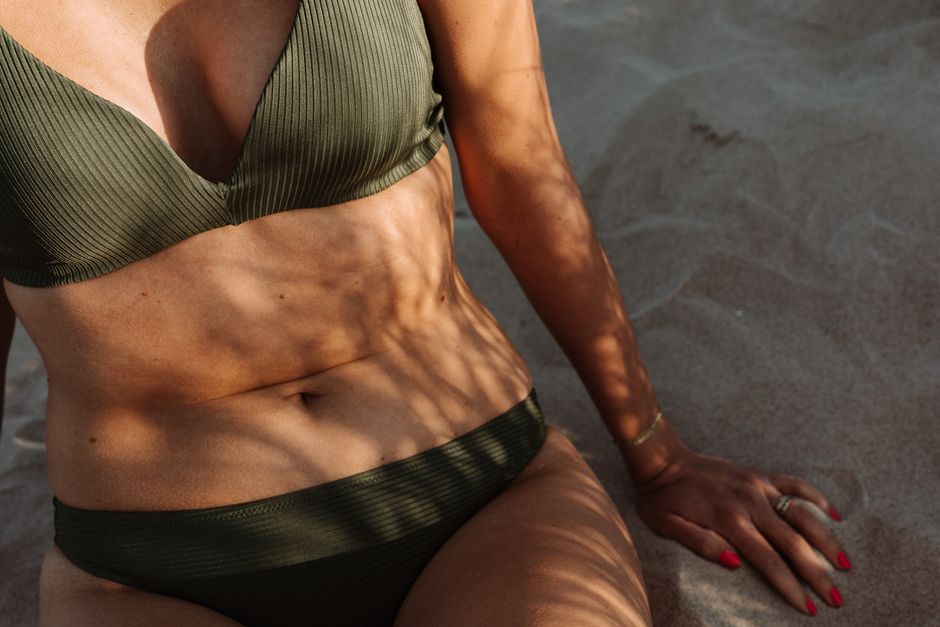
Thong-bikini tan lines come from uneven ultraviolet exposure, not a harmless beauty shortcut. Protect every area the suit leaves bare with broad-spectrum, water-resistant SPF 30 or higher, apply it before sun exposure, and reapply after time, water, sweat, or toweling. Rotate bottoms for line placement, not for deeper tanning, and use a cover-up or shade for long beach days.
Do thong bikinis leave permanent-looking tan lines?
A thong bikini can leave a sharp, long-lasting-looking contrast, yet public guidance does not set a timeline for when any one tan line fades.
The part worth taking seriously is the color change itself. The Centers for Disease Control and Prevention states that any change in skin color after UV exposure, whether a tan or a burn, is a sign of injury rather than health. A darker line is not proof that skin has become safer in the sun.
Minimal coverage makes the pattern more obvious because the exposed skin and covered skin receive different amounts of UV. Sand and water reflect UV rays, according to the National Cancer Institute, so beach exposure can reach skin from more than one direction. Clouds do not erase that exposure either.
The cleanest approach is to stop chasing a perfectly uniform result. Skin tone can change. Skin protection should not.
How can I tan evenly while wearing a thong bikini?
You can make tan lines less concentrated by changing coverage and body position, but no positioning method makes intentional tanning safe.
Use a rotation as a wardrobe choice, not an exposure plan. A thong bottom on one day and a fuller-coverage bottom on another shifts the line. It also gives no license to stay out longer. The CDC advises using several forms of protection when the local UV Index is 3 or higher, including shade, clothing, sunglasses, and sunscreen.
For a long beach day, choose the bottom that fits the activity and add a dry cover-up between swims, walks, meals, and rest. The CDC notes that a wet T-shirt provides far less UV protection than a dry one. A cover-up is not decoration in this setting. It is another layer.
| Situation | Practical choice | Protection that stays the same |
|---|---|---|
| Short swim or brief time outside | Wear the bottom you prefer | Cover all exposed skin with sunscreen before exposure |
| Long beach day | Bring a fuller-coverage bottom or dry cover-up | Seek shade and reapply sunscreen on schedule |
| Swimming, sweating, or toweling off | Do not rely on the first application | Reapply sunscreen immediately afterward |
| Strong sun between 10 a.m. and 4 p.m. | Reduce direct exposure | Use shade, clothing, and sunscreen together |
The National Cancer Institute identifies 10 a.m. to 4 p.m. as the period when rays are strongest. If a thong bikini feels good for a short swim but not for hours on open sand, changing bottoms is sound planning. Comfort changes. UV does not.
Should I wear sunscreen under a thong bikini?
Yes. Wear sunscreen on every area of skin the thong bikini does not cover, including the skin at and around its edges.
The American Academy of Dermatology recommends broad-spectrum, water-resistant sunscreen with SPF 30 or higher. Its guidance calls for about 1 ounce, roughly a shot-glass amount, to cover skin not covered by clothing for most adults. Body size changes the amount needed.
Apply before the beach, not once the skin is already in the sun. The Academy says sunscreen takes about 15 minutes to absorb and protect. The National Cancer Institute advises application 30 minutes before going outdoors. These sources differ on the lead time, yet they agree on the useful rule: apply before exposure, then reapply every two hours and after swimming or sweating.
Do not treat fabric as a force field. The National Cancer Institute says UV can pass through light clothing. Sunscreen belongs on exposed skin; shade and clothing belong in the same plan. One tool is protection. Several tools are a boundary.
Frequently Asked Questions
How do I avoid burning around thong bikini lines?
Apply sunscreen to all exposed skin before going outside, including the skin immediately around the bikini edges, legs, and tops of the feet. The American Academy of Dermatology recommends reapplying every two hours and immediately after swimming or sweating. A cover-up or shade adds protection when the UV Index is 3 or higher.
Can I alternate bikini bottoms to reduce uneven tan lines?
Yes. Alternating coverage can shift where the lines fall, so one small area does not receive all the exposure. It does not make tanning safe: the CDC states that any skin-color change after UV exposure is a sign of injury, so keep sunscreen and other protections in place with every style.