
Can I Use Baking Powder Instead of Baking Soda?
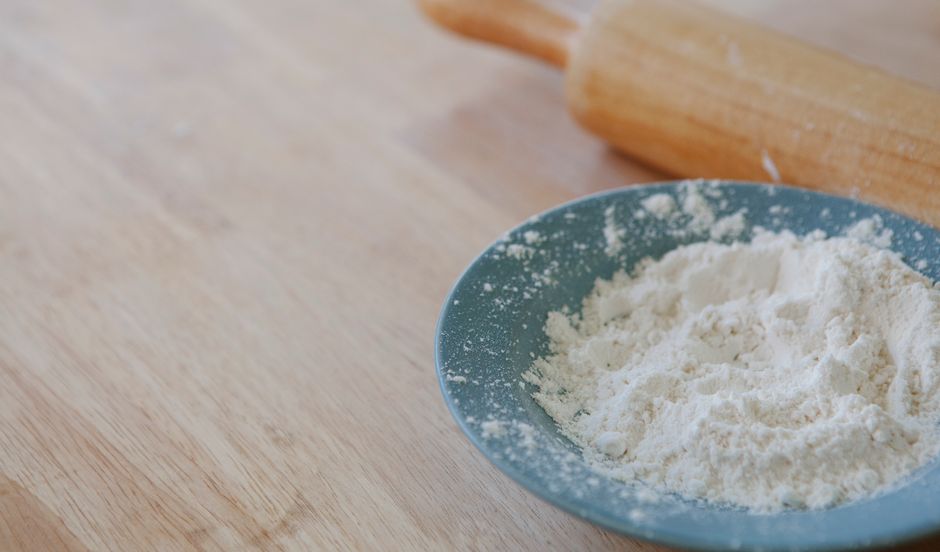
Yes, baking powder can replace baking soda in many baked goods, but the swap changes more than the rise. Use three teaspoons of baking powder for each teaspoon of baking soda as a general substitute. Since baking powder brings its own acid and the larger dose can affect flavor, browning, spread, and texture, the result depends on the recipe’s acidic ingredients and the kind of baked good.
Can I use baking powder instead of baking soda?
Yes, you can use baking powder in place of baking soda, but it will not behave exactly the same way. Baking soda is a base that reacts with acidic ingredients such as buttermilk, yogurt, lemon juice, brown sugar, or natural cocoa to produce carbon dioxide. Baking powder contains both a base and an acid, so it can leaven when moisture reaches it.
That difference matters because soda’s job is not limited to making a batter rise. King Arthur Baking explains that baking soda tends to encourage spread and tenderness, while baking powder tends to add height and lightness. Soda also helps baked goods brown. A swap can therefore change the shape and surface of the food as well as its crumb.
Double-acting baking powder reacts in two stages: once when mixed with liquid and again when heated. The timing and balance of leavening in the recipe still matter, so a substitute is a practical fix rather than an exact match.
Acidic ingredients are the main clue. If a recipe contains buttermilk, yogurt, lemon juice, brown sugar, or natural cocoa, its baking soda may be there to react with those ingredients. Replacing soda with powder adds leavening, but it does not perform the same neutralizing role. Simply Recipes notes that the remaining acid can make the result taste too acidic.
How much baking powder replaces one teaspoon of baking soda?
Use three teaspoons, or one tablespoon, of baking powder to replace one teaspoon of baking soda as a general ratio. King Arthur Baking gives this substitution, while warning that the larger amount may leave a slightly bitter or off-putting taste.
Think of the ratio as a starting point, not a promise that the recipe will come out unchanged. The powder supplies its own acid, and the recipe’s existing acids remain part of the mix. The result can shift in flavor, color, texture, or volume; Utah State University Extension cautions that ingredient substitutions can affect all four.
| Pantry situation | Practical guide | What to expect |
|---|---|---|
| Recipe calls for 1 teaspoon baking soda | Use 3 teaspoons baking powder as a general substitute | Leavening may work, but flavor and texture can change |
| Recipe calls for 1 teaspoon baking powder, and soda plus cream of tartar are available | Utah State University Extension lists 1/4 teaspoon baking soda plus 5/8 teaspoon cream of tartar | Substitutions can still affect the finished food |
| Recipe calls for 1 teaspoon baking powder, and soured milk or buttermilk is available | The extension lists 1/4 teaspoon baking soda with 1/2 cup soured milk or buttermilk | The added liquid changes the recipe’s liquid balance |
The last two rows describe ways to replace baking powder, not baking soda. They are useful when the pantry problem runs in the opposite direction. The extension also lists 1/4 teaspoon baking soda with 1/2 tablespoon vinegar or lemon juice and enough milk to make 1/2 cup as another baking-powder substitute. Each option brings a different amount of acid or liquid, so the recipe may need adjustment.
For a baking-soda shortage, check the recipe before reaching for the ratio. When soda is paired with a strong acidic ingredient, adding powder supplies lift but leaves the acid unneutralized. When the recipe’s flavor and color depend on soda, the difference becomes more noticeable.
Will baking powder work instead of baking soda in cookies?
Yes, baking powder can leaven cookies in place of baking soda, but the cookies are likely to spread and brown less. The swap changes the cookie’s character, not only its height.
America’s Test Kitchen reports that in its sugar-cookie tests, baking powder alone produced pale, crisp cookies with minimal spread, while baking soda increased browning and spread. That comparison shows why the same substitution can be acceptable for lift yet disappointing if the goal is a thin, well-browned cookie.
Cakes and muffins respond to the same basic chemistry, though their desired textures differ. Baking powder tends toward height and a lighter structure; soda tends to promote spread and tenderness. In a cake whose flavor or color comes from acidic ingredients, swapping out soda can also leave more acidity in the finished bake. Simply Recipes points to devil’s food and red velvet cakes as examples where baking soda contributes browning and flavor, while baking powder supplies lift in goods such as biscuits and scones.
Muffins sit between those cases: the recipe’s acids and the desired crumb both matter. If the recipe uses buttermilk or yogurt with soda, baking powder can add gas, but it does not reproduce soda’s reaction with those ingredients. If appearance and a predictable texture matter, use the leavener named in the recipe when possible.
America’s Test Kitchen’s cornbread comparison makes the trade-off concrete. With acidic buttermilk, baking powder alone produced a bright-yellow loaf with an open crumb but a sour, metallic taste; combining soda and powder produced a golden loaf with good height and an open crumb. The point is not that one blend suits every recipe. It is that acid balance and rise work together.
Frequently Asked Questions
Why does a baking soda substitute depend on acidic ingredients?
Baking soda needs an acid and moisture to release carbon dioxide, while baking powder contains its own acid. Replacing soda can leave the recipe’s acids unneutralized, affecting flavor as well as leavening.
What happens if I leave baking soda out of a recipe?
If the recipe depends on baking soda for leavening, the baked good can turn out dense or flat. Its browning, spread, flavor, and texture can also change because soda does more than create lift.
Sources
Related guides
How Can I Make a Quick Summer Pasta Salad That Stays Fresh?
Make a quick summer pasta salad with the right shape, well-seasoned dressing, fresh produce, and last-minute add-ins.
What Should I Eat During Chemotherapy When Food Is Hard to Tolerate?
Practical food and recipe adjustments for chemotherapy nausea, mouth sores, metallic taste, low appetite, hydration, and food safety.

What Is a Light Breakfast Before Chemotherapy When Nausea Is a Concern?
A practical guide to light, low-odor breakfasts, timing, snacks, and nausea warning signs before a chemotherapy infusion.

What Can I Eat When Everything Tastes Metallic During Chemotherapy?
Practical, safety-aware meal and snack ideas for chemotherapy taste changes, including metallic taste, red-meat aversion, and mouth sores.