
What Objects Are Included in the Complete Solar System?
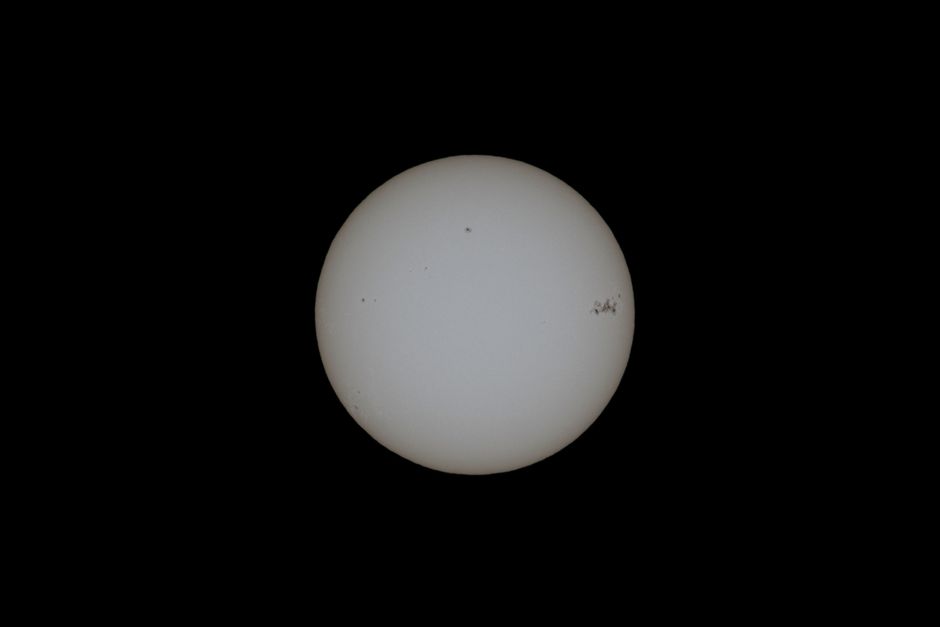
The Solar System includes the Sun, eight planets, hundreds of moons, and countless smaller objects such as dwarf planets, asteroids, and comets. Its map extends from the inner planets and asteroid belt through the outer planets and Kuiper Belt; farther out, the Oort Cloud is a predicted, distant shell inferred from comet evidence, not a region directly observed. The boundary depends on what you mean: the Sun’s influence reaches beyond the heliosphere.
What objects are included in the complete Solar System?
The complete Solar System includes the Sun and everything gravitationally associated with it, from the planets to small icy bodies in far-flung regions. NASA’s overview names eight planets and countless smaller bodies, including dwarf planets, asteroids, and comets, as well as hundreds of moons. That inventory matters: a planet-only map leaves out much of the system.
Start near the Sun and move outward. Mercury, Venus, Earth, and Mars are terrestrial planets. The asteroid belt lies between Mars and Jupiter, and it is also home to Ceres, a dwarf planet. NASA reports that its Dawn spacecraft arrived at Ceres in March 2015. Beyond the belt are Jupiter and Saturn, the gas giants, followed by Uranus and Neptune, the ice giants.
Past Neptune, the Kuiper Belt is a sparsely occupied ring of icy bodies. Farther still, the Oort Cloud is a spherical shell predicted from models and observations of comets. This is a crucial distinction in a useful Solar System map: the Kuiper Belt is a known population of objects, while the Oort Cloud’s overall structure has not been directly observed.
There is also a second kind of boundary to keep straight. The heliosphere is the region shaped by the Sun’s solar wind, and its termination shock is roughly 80–100 astronomical units (AU) from the Sun, according to NASA’s Solar System facts. That boundary is far inside the estimated reach of the Oort Cloud, so “where the Solar System ends” depends on whether you mean the solar wind’s domain or the farthest objects gravitationally associated with the Sun.
How many dwarf planets are officially recognized?
NASA lists five officially recognized dwarf planets: Ceres, Pluto, Haumea, Makemake, and Eris. The count is a classification, not a claim that only five small worlds could fit the category; the International Astronomical Union’s 2006 resolution anticipated additional candidates.
The distinction comes down to orbital neighborhood. Under the IAU definition, a planet orbits the Sun, is nearly round because of its own gravity, and has cleared the neighborhood around its orbit. A dwarf planet also orbits the Sun and is nearly round, but it has not cleared that neighborhood and is not a satellite. That last condition separates dwarf planets from moons.
In practical terms, “cleared” does not mean an orbit contains no other material. It means the object dominates its orbital zone enough to distinguish it from a population of comparable small bodies. Ceres and Pluto illustrate why location alone does not decide the label: Ceres is in the asteroid belt, while Pluto is among the distant icy objects beyond Neptune. NASA’s planet guide names all five and records New Horizons’ Pluto flyby on July 14, 2015.
The IAU’s 2006 decision established the current eight-planet count and defined dwarf planets as a separate class. That gives learners a clean sorting rule: first ask whether an object orbits the Sun; then consider whether it is nearly round, has cleared its orbital neighborhood, and is a satellite. A body can be world-like without meeting the full definition of a planet.
What is the difference between the Kuiper Belt and Oort Cloud?
The Kuiper Belt is a sparsely occupied region of icy bodies beyond Neptune; the Oort Cloud is a much more distant, spherical shell inferred from models and comet observations, and it has not been directly seen. The short version: one is a known belt of objects, the other is a predicted reservoir at the Solar System’s outer frontier.
Scale makes the contrast clearer. NASA estimates that the Oort Cloud may begin around 1,000 AU and extend to about 100,000 AU; its farthest objects could be about 1.6 light-years from the Sun. An AU is the average distance between Earth and the Sun. These are estimates, not a directly mapped border, because the cloud’s objects are too distant and faint to observe as a complete shell.
Spacecraft have measured a different boundary. Voyager 1 crossed the heliopause in 2012, and Voyager 2 crossed it on November 5, 2018. NASA explains that crossing the heliopause means entering interstellar space, not leaving the Solar System: by its broader definition, the Solar System continues beyond the Oort Cloud.
The journey also shows why the outer Solar System is difficult to explore. NASA estimates that Voyager 2 could take about 300 years to reach the Oort Cloud’s inner edge and roughly 30,000 years to travel beyond it. These figures describe the scale of the proposed region, not a direct spacecraft survey of its contents. Telescopes and comet observations provide evidence for the distant population, while spacecraft have sampled the heliosphere and visited nearer bodies such as Pluto and Ceres.
One proposed object beyond Neptune should be kept separate from this established map. Planet Nine has not been directly observed; NASA says the case rests on indirect evidence from the orbits of distant Solar System objects. Some researchers see those patterns as evidence for a planet perhaps 10 times Earth’s mass and about 20 times farther from the Sun than Neptune, while other analyses find the patterns may fit a random distribution. For now, it is a hypothesis—not a confirmed member of the Solar System inventory.
Frequently Asked Questions
Where does the Solar System end?
There is no single edge that works for every definition. The heliopause marks the boundary between the solar wind and interstellar space, but NASA considers the Solar System to extend beyond the Oort Cloud, which may reach about 100,000 astronomical units from the Sun.
Is there really a Planet Nine beyond Neptune?
No such planet has been directly observed, so Planet Nine remains a hypothesis. The proposal is based on patterns in the orbits of distant objects, which researchers interpret differently.
Sources
Related guides

Which Foods Contain Microplastics, and Are They Dangerous?
Microplastics have been found in many foods, but inconsistent testing and limited health evidence make the risks—and the role of packaging—uncertain.

What Is the Best Alternative to Plastic Food Packaging?
Compare paper, molded fiber, compostables, and reusable food packaging by performance, disposal access, and practical trade-offs.