
How to Choose Eyeglass Frames: Titanium, Acetate, and More
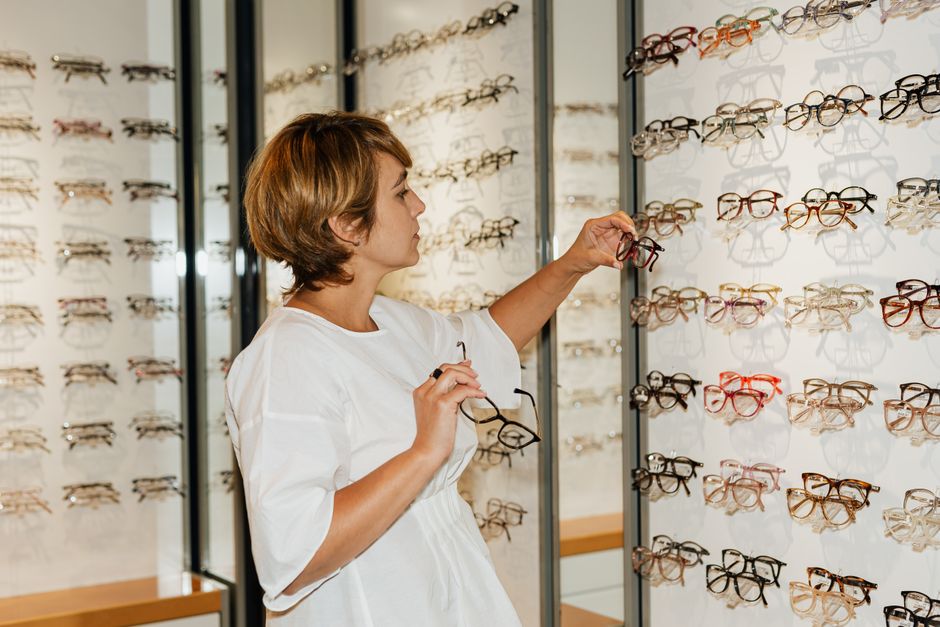
For everyday glasses, choose by matching material to your main constraint: titanium is strong, light, corrosion-resistant, and a strong option for metal sensitivity; acetate is lightweight and easy for an optician to adjust, but plastic can break or weaken over time. Stainless steel and beryllium offer other trade-offs. Fit, prescription, and lens thickness matter as much as the frame label.
Are titanium frames better than acetate for everyday glasses?
Titanium is the better match when low weight, strength, corrosion resistance, and metal sensitivity are priorities; acetate is a lightweight, adjustable choice with more concern about long-term breakage or loss of strength. Neither material wins every comparison. Start with the trade-off you most need to solve.
The American Academy of Ophthalmology describes titanium as strong, lightweight, corrosion-resistant, and hypoallergenic. Its frame guide describes cellulose acetate, also called Zyl, as lightweight and easy for an optician to adjust. The AAO also notes that plastic frames can break more easily than metal and may lose color or strength over time.
That distinction changes the buying decision. If you want a light frame that an optician can adjust, acetate is a practical candidate. If you want metal with low weight and corrosion resistance, titanium is a sharper fit. Do not read “plastic” as one uniform material: the supplied guide also describes cellulose acetate propionate as a lightweight, nylon-based hypoallergenic plastic.
Other metal choices have their own balance. Stainless steel is lightweight and strong, but heavier than titanium, according to the AAO. Beryllium is described as lightweight, strong, flexible, and easy for an optician to adjust. Ask for the specific material rather than relying on a broad “metal frame” label.
| Option | Who it suits | Cost | Key limitation |
|---|---|---|---|
| Titanium | People prioritizing strength, low weight, corrosion resistance, or a hypoallergenic metal | not published | Cost comparison not published |
| Cellulose acetate (Zyl) | People seeking a lightweight frame that an optician can adjust | not published | Plastic may break more easily than metal or lose color or strength over time |
| Stainless steel | People seeking a lightweight, strong metal frame | not published | Heavier than titanium |
| Beryllium | People seeking a lightweight, strong, flexible frame that is easy to adjust | not published | Cost comparison not published |
| Monel | Suitability depends on material sensitivity and the frame’s coating | not published | May contain nickel and can cause reactions in sensitive skin |
For a strong prescription, bring the lens into the decision early. The World Health Organization’s 2025 spectacle quality guide says frame-material choice affects comfort, fitting, cost, and durability, while lens material affects spectacle thickness, weight, and lens durability. A material shortlist is useful; it is not a substitute for checking how the completed prescription will fit the frame.
Which glasses frames are best for sensitive skin or nickel allergies?
Titanium is the clearest option in the supplied guidance for someone concerned about metal sensitivity, while Monel deserves a material check because it may contain nickel. The frame contacts skin, so material and coating are part of fit—not an afterthought.
The AAO calls titanium hypoallergenic, including for people allergic to metals such as nickel. It also says Monel, a metal mixture, may contain nickel and can cause reactions in sensitive skin, although many Monel frames have a protective coating. That coating is relevant, but the source does not establish that every coated frame will suit every person.
The WHO’s 2025 guide similarly says to consider allergies when choosing frame material because frames contact the skin and materials or coatings can cause allergic reactions. Use a direct question at the shop or with the seller: “What is the frame made of, and what coating is on it?” If the material is unclear, request the exact composition before ordering.
Plastic options may also be worth discussing. Optometrists.org describes cellulose acetate propionate as hypoallergenic, but material labels can vary. If you have a known reaction, share that with your optician and confirm the specific frame material rather than assuming every plastic or metal frame behaves alike.
What frame material is light but durable?
Titanium is the strongest all-around match in these sources for a frame that is both lightweight and durable: the AAO describes it as strong and light, and the WHO says metal frames tend to be strong and withstand wear. Stainless steel and beryllium also combine lightness with strength, with different trade-offs.
“Light” and “durable” are not a complete specification. The WHO says frame selection should account for weight, strength, flexibility, and corrosion resistance because these affect comfort, fitting, cost, and durability. Beryllium adds flexibility and adjustability; stainless steel is strong and light but not as light as titanium. For acetate, the adjustment advantage comes with the AAO’s warning that plastic can break more easily than metal or lose color or strength over time.
Prescription strength can change which frame works. Optometrists.org says stronger prescriptions can mean thicker lenses and recommends considering smaller frames; it also notes high-index lenses can minimize thickness. The Canadian Association of Optometrists likewise says a frame that is too large can make lenses thicker with a strong prescription. Ask the optician to assess frame size and lens choice together, rather than choosing a frame first and hoping the lenses suit it.
Online ordering makes that check especially important. A proper fit assessment can include pupillary distance, frame size and shape, lens curvature and material, optical-center height, and final frame adjustment, according to the Canadian Association of Optometrists. Its cited September 2011 study found that 44.8% of eyewear ordered online failed at least one optical or impact test parameter, and 28.6% were outside optical tolerance. Those figures describe that study, not a guarantee about any particular seller.
Before you click buy, use this short checklist:
- Confirm the prescription. The National Eye Institute advises getting an eyeglass prescription from an eye doctor and regular eye exams. Its guidance distinguishes single-vision lenses for near or distance vision from multifocal lenses for both.
- Check fit measurements. Verify pupillary distance, frame size, bridge fit, and temple length. Optometrists.org gives a common temple-length range of 120–150 mm and recommends checking that the bridge does not slide, pinch, or sit too high.
- Match frame size to the prescription. Ask whether a smaller frame or high-index lenses could reduce thickness for a strong prescription.
- Verify material and skin contact. Ask for the exact material and any coating, especially if nickel sensitivity is a concern.
- Read the return and adjustment terms. Confirm what happens if the frame does not fit or needs adjustment; public data in the supplied sources does not establish sellers’ policies.
Frequently Asked Questions
Are plastic frames easier to adjust than metal frames?
Cellulose acetate frames are described by the American Academy of Ophthalmology as easy for an optician to adjust. That does not mean all plastic frames are easier to adjust than all metal frames; beryllium metal frames are also described as easy to adjust. Ask an optician about the specific frame before purchase.
What should I check before ordering new frames online?
Confirm your written prescription and the measurements needed for fit, including pupillary distance, frame size, bridge fit, and temple length. Check how the lens material and frame size suit your prescription, then read the seller’s return policy and find out how final adjustments will be handled.
Make the shortlist practical: name your priority—lightness, durability, adjustability, or skin sensitivity—then take the frame material and measurements to an optician. Before ordering, ask one final question: “Will this frame size and lens material work with my prescription?”
Sources
Related guides

Antique vs. Vintage-Inspired Engagement Rings: What to Check
Compare antique and vintage-inspired engagement rings, check condition and sizing, and plan practical care and insurance.

How to Choose Stability Walking Shoes for Flat Feet
Compare shoe support, fit, cushioning, and orthotics to find a practical starting point for walking with overpronation or flat feet.

What Should I Wear From the Beach to a Taverna in Greece?
A Greece beachwear guide for moving from the sea to island streets, tavernas, churches, and archaeological sites.

How Can I Manage Tan Lines in a Thong Bikini Safely?
A practical guide to managing thong-bikini tan lines with safer sunscreen, coverage, shade, and swimwear-rotation choices.