
What Causes Autism, and What Can Genetics Tell You?
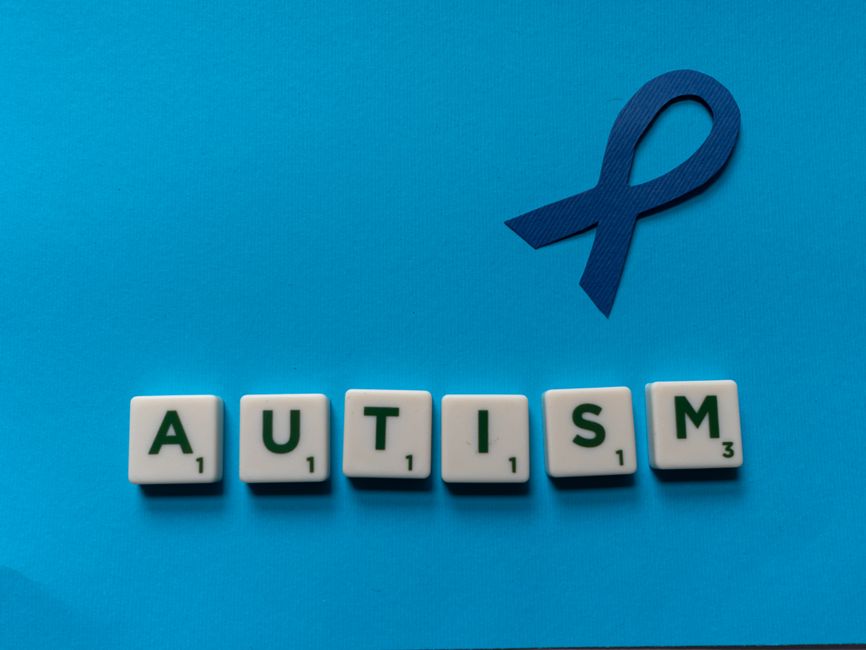
Autism risk usually reflects a mix of genetic influences, not one deterministic cause: many common inherited variants can each contribute a small effect, while rarer inherited or de novo changes can have larger effects in some people. Genetic findings can help explain risk or identify a condition, but they cannot reliably predict whether one person will be autistic or determine a family’s exact recurrence likelihood.
What genetic changes can contribute to autism?
Several kinds of genetic changes can contribute to autism risk. Many common variants, each with a very small effect, can add up; less-common gene variants or chromosome changes may have a stronger effect in particular people. The important distinction is cumulative risk versus a single cause.
MedlinePlus Genetics reports that changes in more than 1,000 genes have been reported in connection with autism, although many reported associations are not confirmed and no single gene explains most autism. It estimates that genetic factors overall contribute 40–80% of autism risk. That range describes genetic influence across populations, not the probability that a specific person will be autistic.
Rare gene variants or chromosome abnormalities are considered the cause in about 2–4% of people with autism, often as part of a broader genetic syndrome, according to MedlinePlus Genetics. “Cause” here refers to a recognized finding that may explain an individual’s presentation; it does not mean that most autism has one identifiable mutation.
A study summarized by the National Institute of Mental Health estimated that about 52% of autism risk was associated with common and rare inherited genetic variation, while spontaneous mutations contributed 2.6% of total risk. These are estimates from a particular study at the population level. They are not an individual risk score, and they should not be added to the separate MedlinePlus estimate as if the measures were interchangeable.
“Although each exerts just a tiny effect individually, these common variations in the genetic code add up to substantial impact, taken together.”
Researchers quoted by the National Institute of Mental Health
A practical way to read these findings is to separate two questions: does a genetic change contribute to likelihood, and does it explain a particular person’s autism? The first can be true even when the second remains unknown.
Is autism inherited from one or both parents?
Autism-related genetic influences can be inherited from either parent, and risk may reflect contributions from both sides of a family. There is no single usual inheritance pattern for autism, and carrying an associated change generally means increased likelihood rather than certainty.
MedlinePlus Genetics puts it plainly: “People with gene changes associated with ASD generally inherit an increased risk of developing the condition, rather than the condition itself.” A parent may carry a variant without being autistic because the variant is not a guarantee. The effect also depends on the broader combination of genetic influences; a single family observation cannot identify that combination on its own.
This is why a family tree can provide useful context without supplying a simple answer. A clinician or genetics team may consider which relatives have relevant diagnoses or features, what testing has already found, and whether a known genetic condition is present. The result is a more informed discussion, not a certainty about what will happen in a future pregnancy.
Can a child be autistic if neither parent is autistic?
Yes. A child can be autistic even when neither parent is autistic, because genetic risk is not inherited as a straightforward, guaranteed condition and some changes arise newly.
Common inherited variants can contribute small effects without producing autism in a parent. In addition, a de novo change may appear in the child rather than being detectable in either parent. Autism can also reflect a complex mix of influences that current genetic testing does not fully identify.
For families considering another child, a group recurrence statistic can be a starting point, not a personal forecast. A prospective study reported in Pediatrics followed 1,605 infants with an older autistic sibling at 18 sites; 20.2% were diagnosed with autism by age 3, with a 95% confidence interval of 16.6%–24.3%. The estimate differed with factors including the infant’s sex and having more than one older autistic sibling.
That 20.2% is an average for the study group. It does not determine an individual family’s likelihood, and a specific genetic finding or family history may change how a genetics professional interprets the situation. The study authors recommend developmental monitoring for younger siblings, which gives families a concrete next step without treating a population estimate as a diagnosis.
What does it mean when an autism-related variant is de novo?
A de novo variant is a genetic change detected in a child but not in either parent’s tested sample. It may arise in an egg or sperm cell, or shortly after fertilization; “new” describes when it appears in a family, not how strongly it affects a person.
MedlinePlus Genetics’ guide to mutations and disorders explains that a parent can have germline mosaicism: some egg or sperm cells carry a variant even though the variant is not found in other cells. This means a change described as de novo can, in some circumstances, recur in a family. The label alone does not settle recurrence risk.
Testing also has limits. According to American Academy of Pediatrics HealthyChildren.org, testing may identify a pathogenic variant, a variant of uncertain significance, or no finding. No single test checks for every genetic condition; which tests are appropriate depends on the child and family history.
A variant of uncertain significance is not a confirmed explanation. A negative result also does not rule out a genetic condition: a test may not detect the cause, or researchers may not yet know how to interpret it. A genetics team can explain what a result does and does not establish and discuss implications for relatives or future pregnancies.
Frequently Asked Questions
Is there one gene that causes autism?
No single gene explains most autism. MedlinePlus Genetics reports that changes in more than 1,000 genes have been connected with autism, though many reported associations are not confirmed.
If one child is autistic, what is the chance a sibling will be autistic?
A prospective study reported that 20.2% of infants with an older autistic sibling were diagnosed with autism by age 3. That is a group estimate, not a prediction for an individual family; recurrence differed with factors such as the infant’s sex and whether there was more than one older autistic sibling.
Can genetic testing identify the cause of autism?
Testing can identify some genetic conditions or variants relevant to a child’s health, but no single test checks for every possible genetic condition. A genetics team can interpret a finding in the context of the child’s features and family history.
Does a negative genetic test mean autism is not genetic?
No. A negative result means the test did not identify a cause; current tests may not detect the relevant change, or science may not yet have identified it. It does not rule out genetic contributions to autism.
For a useful next conversation, write down what a test result actually says, what remains uncertain, and what question matters most for your family. Ask a genetics professional to interpret those points alongside family history rather than treating any single statistic or variant label as a personal prediction.
Sources
- MedlinePlus Genetics: Autism Spectrum Disorder
- National Institute of Mental Health: Common Gene Variants Account for Most Genetic Risk for Autism
- American Academy of Pediatrics, Pediatrics: Familial Recurrence of Autism
- MedlinePlus Genetics: Mutations and Disorders
- American Academy of Pediatrics, HealthyChildren.org: What to Expect During Your Child’s Medical Genetics Appointment
Related guides

What Is the Best Alternative to Plastic Food Packaging?
Compare paper, molded fiber, compostables, and reusable food packaging by performance, disposal access, and practical trade-offs.
Which Foods Contain Microplastics, and Are They Dangerous?
Microplastics have been found in many foods, but inconsistent testing and limited health evidence make the risks—and the role of packaging—uncertain.
What Objects Are Included in the Complete Solar System?
Map the Solar System from the Sun to the Oort Cloud, with clear explanations of dwarf planets, planetary boundaries, and the unconfirmed Planet Nine proposal.